Eat Your Sunscreens
How the Foods We Consume Protect Our Skin from the Sun’s Harmful Rays
Ultraviolet (UV) radiation from the sun triggers inflammation and oxidative stress in our skin, leading to redness, premature aging, and cellular damage. While topical sunscreens form the first line of defense, recent research shows that certain foods can act like an internal SPF—quenching free radicals, reducing inflammation, and bolstering the skin’s natural barrier. By “eating your sunscreens,” you give your body a second layer of protection that works from the inside out.
Why Internal Protection Matters:
Topical sunscreens must be applied generously and reapplied frequently—studies show most people use only 25–50% of the recommended amount—leaving gaps in coverage. In contrast, nutrients from whole foods circulate through your bloodstream to every inch of skin, evening out protection and supporting long-term cellular health. Antioxidants neutralize the free radicals generated by UV exposure, while anti-inflammatory compounds calm the immune response that leads to redness and swelling. Together, these actions help maintain collagen and elastin, keeping skin plump and resilient.
The Science in Simple Terms:
Think of UV rays as tiny sparks that ignite destructive chemical reactions in skin cells. Antioxidants from food act like firefighters, rushing in to extinguish those sparks before they cause harm. Meanwhile, anti-inflammatory nutrients tell your immune system, “Stand down,” preventing the overreaction that leads to sunburn. Finally, certain plant compounds boost the production of protective enzymes, creating an internal “shield” that endures for days—far longer than most topical sunscreens.
Topical + Internal = Best Defense
For optimal sun protection, combine your favorite mineral or chemical sunscreen with a daily diet rich in protective foods. This two-pronged approach not only reduces immediate UV damage but also builds stronger, healthier skin over time—helping you look and feel younger.
Foods to Include Daily Meals:
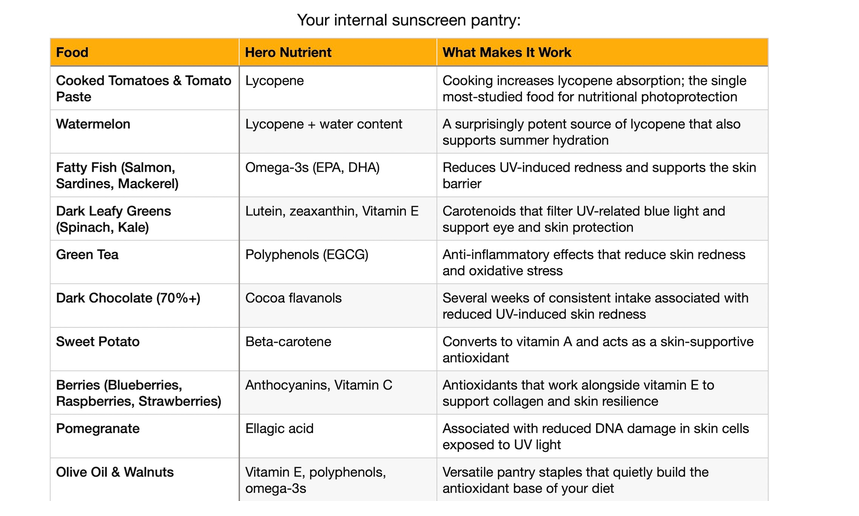
- Tomatoes & Watermelon (Lycopene): A potent carotenoid that soaks up UV-induced free radicals.
- Carrots & Sweet Potatoes (Beta-Carotene): Precursors to vitamin A, supporting cell repair and renewal.
- Leafy Greens (Lutein & Zeaxanthin): Antioxidant pigments that guard against UV-driven oxidative stress.
- Berries (Anthocyanins): Dark pigments loaded with antioxidants to calm inflammation.
- Turmeric (Curcumin): A powerful anti-inflammatory that soothes UV-triggered immune reactions.
- Green Tea: Polyphenols that boost protective enzyme production and soothe skin.
- Nuts & Seeds (Vitamin E): Fat-soluble antioxidants that preserve cell membranes from UV damage.
- Fatty Fish (Omega-3s): Essential fats that strengthen the skin barrier and reduce redness.
- Pomegranate (Ellagic Acid): Polyphenol that enhances natural SPF and fights free radicals.
- Broccoli Sprouts (Sulforaphane): Triggers internal detox pathways and reinforces lasting cellular defense.
Click here to learn more about holistic sunscreen strategies at Holistic Healing News.